

Why Some Texas Pralines Are Chewy and Others Crumble |
From old-fashioned pecan candy to Austin's famous chewy pralines, the difference comes down to ingredients, temperature and the way sugar behaves as it cools. |
By Dottie Lane | Texas Shoutouts
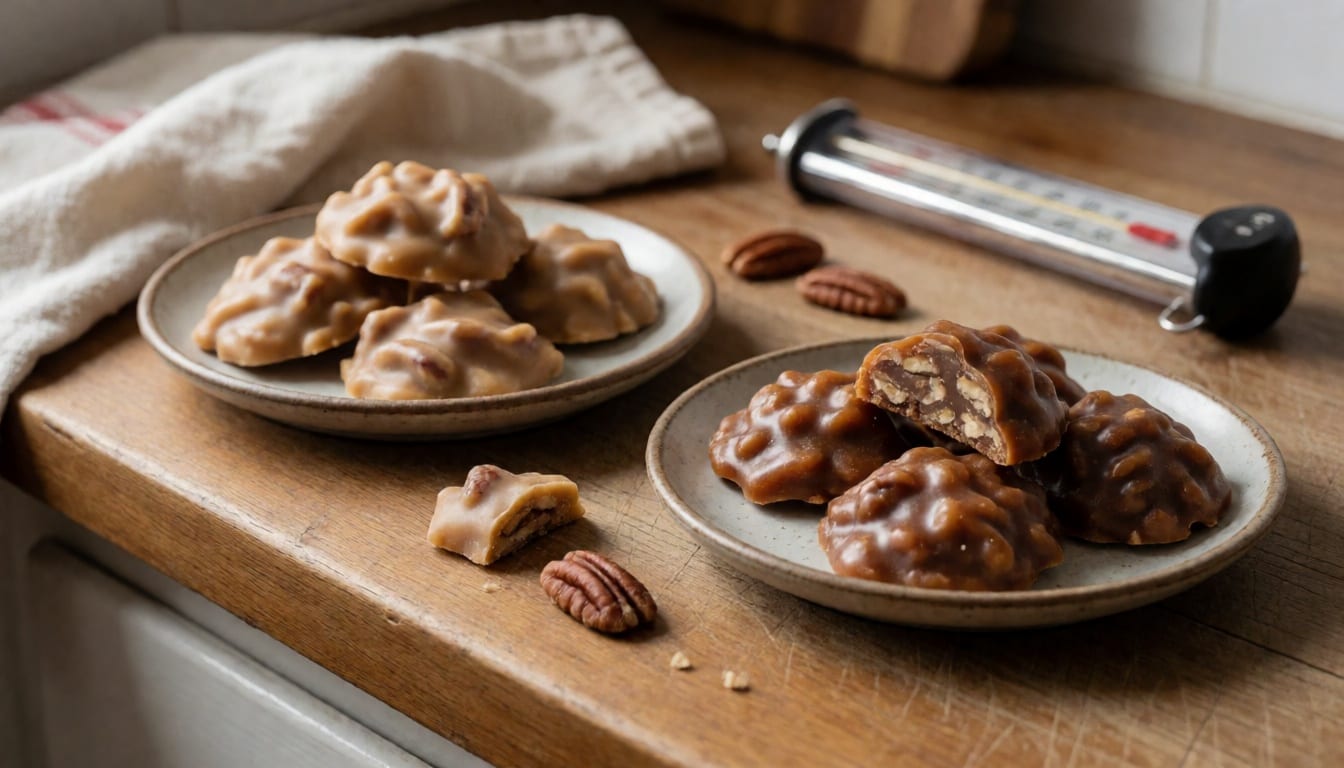
Pick up a pecan praline from one Texas candy shop, and you might find yourself enjoying something soft and buttery that takes a little chewing.
Pick up another from a neighborhood Tex-Mex restaurant, and it might break apart with the first bite, leaving a sweet, almost creamy texture in your mouth.
Both are called pralines. Both make good use of one of our state's most familiar agricultural products.
But the people who make them are working toward different results.
Understanding how those differences come about can give you a new appreciation for the candy makers who have been preparing these treats for generations. It might also help you avoid a few mistakes if you decide to make your own Christmas candy this year.
A Christmas Recipe From 1937
On December 16, 1937, the Floyd County Hesperian in Floydada, Texas, published a recipe column encouraging readers to make candy.
The column was prepared by Mary Watson Jones, a home supervisor with the Farm Security Administration.
Among the recipes was one for pecan pralines made with sugar, cream, salt and pecans.
The instructions called for browning a portion of the sugar separately before combining it with the cream mixture. The combined mixture was cooked to 238 degrees Fahrenheit, cooled and beaten until creamy.
The pecans were then added, and the candy was portioned onto waxed paper.
Jones also advised readers to choose a dependable recipe, prepare their equipment ahead of time and avoid changing the prescribed cooking temperature.
Nearly ninety years later, that advice still makes sense.
What is particularly interesting about the old recipe is that the desired result depended on more than cooking sugar and adding nuts.
Cooling and beating were important steps. They helped determine what the candy would feel like when somebody took a bite.
How Different Praline Traditions Reached Texas
The pecan praline belongs to a much larger family of sweets made with nuts and sugar.
In France, earlier praline traditions involved sugar-coated almonds. Across Louisiana and other parts of the Gulf Coast, pecans became a familiar ingredient in versions of the confection.
New Orleans developed a particularly strong association with pecan pralines.
Black women selling homemade candy on the city's streets played an important role in establishing that tradition after the Civil War. Their work helped turn pralines into a recognizable part of the city's food culture while providing a means of earning an independent income.
Texas candy-making traditions also drew from Mexico.
In a December 2017 Houston Chronicle article, culinary historian MM Pack explained how both Louisiana and Mexican confectionery traditions contributed to the development of Texas pecan candy.
Mexican and Mexican American candy vendors helped establish a connection between pecan sweets and the restaurants that would become familiar parts of Texas communities.
These histories help explain why pralines in Texas do not all taste or feel alike.
Different cooks brought different recipes, ingredients and preferences to their kitchens.
When Sugar Becomes Creamy
To understand the texture of a traditional praline, it helps to know a little about ordinary table sugar.
The sugar in your kitchen is already made up of crystals.
When you dissolve it in liquid and heat the mixture, those crystals disappear into the syrup. As the syrup cooks, water evaporates and the mixture becomes more concentrated.
When it cools, the dissolved sugar can begin forming crystals again.
The size of those crystals makes a considerable difference.
A candy containing many very small sugar crystals can have a smooth, creamy texture. Larger crystals can give it an unpleasantly coarse or sandy consistency.
That is why a well-made traditional praline may feel delicate and almost creamy even though it breaks apart easily.
The candy maker is not necessarily trying to prevent all crystallization.
Instead, the goal is to control it.
The cooling and beating steps in the 1937 Floydada recipe were part of that process.
Why a Chewy Praline Is Different
Austin's Lammes Candies has long been associated with another kind of pecan praline.
The company describes its Texas Chewie as pecans held together by a buttery, chewy caramel.
That texture belongs to a different approach to confectionery.
While traditional creamy pralines benefit from controlled sugar crystallization, a smooth caramel generally depends on limiting the formation of those crystals.
Ingredients such as corn syrup can help with that job.
Corn syrup contains sugars that interfere with the orderly formation of table sugar crystals. This helps candy makers maintain a smoother consistency.
Butter, cream and the amount of water remaining in the finished mixture also influence its texture.
A chewy caramel should remain pleasantly flexible after it cools, rather than breaking into a dry or crumbly piece.
These are general candy-making principles, not a description of Lammes' proprietary recipe. The exact formula and production methods used for a particular commercial candy may differ considerably from what a home cook would use.
What a Few Degrees Can Change
One of the most useful pieces of equipment in a candy maker's kitchen is a reliable thermometer.
Mississippi State University Extension identifies several temperature ranges associated with different kinds of candy.
Traditional pralines are commonly associated with the soft-ball stage, around 235 to 240 degrees Fahrenheit.
Caramels are often cooked to the firm-ball stage, around 245 to 250 degrees Fahrenheit.
At these higher temperatures, more water has evaporated from the mixture, leaving a more concentrated syrup.
But temperature is only part of the answer.
Different proportions of sugar, cream, butter and other ingredients can produce different results even when the cooking temperatures are similar.
The way a mixture is stirred, cooled and handled after cooking also matters.
That is why adjusting the temperature of your grandmother's praline recipe will not necessarily turn it into a chewy caramel confection.
For a different style of candy, it is usually better to begin with a recipe designed to produce that style.
Three Texas Restaurants, Three Different Results
The variety of pralines found in Texas was particularly well illustrated in a 2017 Houston Chronicle feature.
The newspaper compared recipes associated with Brennan's of Houston, Molina's Cantina and Matt's El Rancho in Austin.
The Brennan's version produced a particularly tender, creamy candy. The Molina's recipe yielded a firmer confection with more noticeable crystallization.
The Austin restaurant's version produced a darker candy with a distinct cooked-sugar flavor.
All three recipes called for cooking the mixture to approximately 240 degrees Fahrenheit, or close to it.
Yet the finished candies were not identical.
Their ingredients and preparation methods made the difference.
The article also documented the tradition of serving pecan pralines with the check at Tex-Mex restaurants, including a custom that began at Molina's in 1965.
For Texans who remember receiving a small piece of pecan candy after dinner, that tradition may be every bit as familiar as finding a praline in a Christmas gift box.
Choosing the Right Praline Recipe
Before you begin making Christmas candy, decide what kind of praline you actually want.
If you prefer the creamy kind that breaks apart easily, look for a recipe that includes specific instructions for cooling and stirring or beating the cooked mixture.
If you want a chewier confection, look for a pecan caramel recipe developed for that texture.
Do not assume that adding extra cream or corn syrup to an existing recipe will automatically improve it.
The ingredients have been selected to work together, and changing their proportions can affect how the candy sets.
It is also worth remembering that the word praline can describe a range of textures. Not every old-fashioned praline is soft, and not every modern one is chewy.
You may discover that the kind your family prefers is somewhere in between.
Five Things Worth Knowing Before Making Christmas Pralines
1. Check your thermometer. Test it in boiling water before using it. Remember that water boils at a lower temperature at higher elevations, so follow the appropriate temperature adjustment for your location. 2. Prepare the cooling surface first. Have your parchment-lined trays and utensils ready. Some praline mixtures begin to firm up quickly once they are ready to portion. 3. Follow the recipe's stirring instructions. Stirring can encourage sugar crystals to form. Whether that is helpful depends on the kind of candy you are making and the stage of preparation. 4. Measure carefully. Substituting sugars, reducing ingredients or changing batch sizes can alter the way the mixture cooks and sets. 5. Keep a few notes. Record the recipe, final cooking temperature and finished texture. If the candy turns out especially well, those details will help you repeat the result next Christmas.
Hot candy syrup can cause serious burns. Adults should handle the cooking, pouring and portioning of the hot mixture.
Allow the candy to cool completely before handling it. If you are preparing it for others, provide ingredient information, particularly regarding pecans, milk and other potential allergens.
When Your Pralines Don't Turn Out Quite Right
Candy making can be a little unforgiving, particularly when you are trying an unfamiliar recipe.
A traditional praline that feels sandy may have developed larger sugar crystals than intended.
A chewy caramel that becomes unexpectedly grainy may have crystallized when it was supposed to remain smooth.
Candy that stays excessively soft may not have reached the intended cooking temperature, although ingredient proportions and moisture can also play a part.
And candy that becomes much harder than expected may have lost too much water during cooking.
Before changing several things at once, compare your preparation with the original recipe.
Check your measurements, thermometer reading and stirring instructions. That may help you identify what went wrong without having to start experimenting with an entirely different set of ingredients.
A Little Taste of Texas History
There is no need to decide that one kind of praline is better than another.
A delicate, creamy piece of pecan candy and a buttery, chewy praline represent different ways of making something enjoyable from familiar ingredients.
If you are putting together a Christmas candy plate this year, consider including more than one style.
You might find that an older relative remembers the kind once made in a family kitchen, while someone else prefers the chewy candies associated with Austin.
That variety is worth appreciating.
Texas food traditions have grown through the contributions of families, street vendors, restaurant cooks, farmers and independent candy makers.
And sometimes the best way to understand a little of that history is simply to notice the difference between two pieces of candy.
Sources and Further ReadingFloyd County Hesperian, December 16, 1937 | Texas Tech University Southwest Collection | Historical Texas praline recipe prepared by Mary Watson Jones. Houston Chronicle | Pecan Pralines: A Sweet Tradition | Texas confectionery history and three restaurant praline recipes. 64 Parishes | Pralines | Louisiana Endowment for the Humanities resource documenting praline history and the contributions of Black candy vendors. Mississippi State University Extension | Experiments in Food Science | Sugar concentration, candy texture and cooking temperature ranges. Exploratorium | The Science of Sugar | An accessible explanation of sugar crystallization. Exploratorium | Caramelization and Caramels | The science behind caramel preparation. Iowa State University Extension and Outreach | Candy Making Success | Practical advice for home candy makers. Lammes Candies | Official Website | Manufacturer's description of its Texas Chewie Pecan Praline. |
0 Comments
Join the conversation
Be the first to comment
Share your thoughts above.