

Why the South Texas Christmas Table Is Really About Family |
From tamaladas to cinnamon-sugar buñuelos and warm champurrado, generations of Texas families keep their Mexican-American holiday traditions alive through food. |
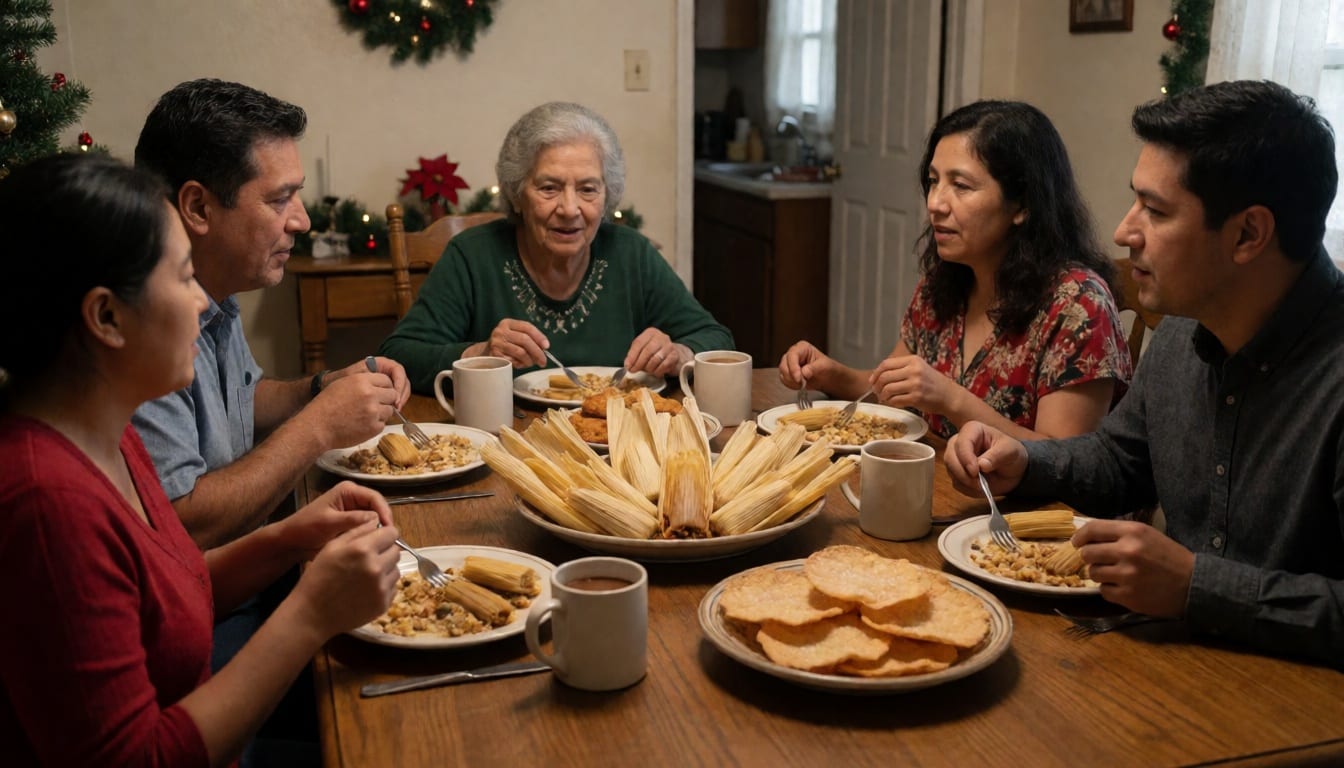
A South Texas Christmas meal can begin long before anybody sits down at the table.
There may be corn husks soaking in the kitchen, a pot of filling cooking on the stove and relatives arriving to help prepare the tamales.
Someone might be responsible for dessert. Someone else may bring a warm drink or pick up something from a favorite neighborhood bakery.
By the time everybody gathers to eat, the family may have already spent hours together.
That is an important part of the tradition.
For many Mexican-American families in South Texas, Christmas food is not simply about what gets served. It is about the people who help prepare it, the knowledge they share and the care they put into welcoming others.
Christmas Begins With the Tamalada
Making tamales from scratch can be a considerable undertaking.
There is masa to prepare, filling to cook, corn husks to soften and dozens of individual tamales to assemble before they are steamed.
When several people share those responsibilities, the work becomes more manageable.
It also becomes an occasion to gather.
A tamalada is a gathering centered on making tamales together. For some Texas families, it is one of the most meaningful parts of the Christmas season.
The Smithsonian Center for Folklife has documented a family tamalada in Pflugerville, near Austin, while Texas Public Radio has reported on families carrying similar customs forward in San Antonio.
These accounts help explain why making tamales can mean considerably more than preparing a holiday meal.
There is time to visit while working. Experienced cooks can show younger relatives how much filling to use and how to fold the husks. Family stories can find their way into the conversation.
And when the work is finished, there is enough food to share.
That combination of useful work and time spent together is something Texans from many different backgrounds can appreciate.
Everybody Has Something to Contribute
A family gathering does not have to depend on one person doing everything.
That is especially true when several generations are involved.
An experienced cook might oversee the preparation of the masa. Another relative can organize the fillings. Younger family members can help with suitable tasks, while someone else makes sure the work surfaces stay clean.
The exact arrangement depends on the household.
What matters is giving people an opportunity to participate.
There is room for relatives who have been making tamales for decades and for those who are learning for the first time.
There is also room for family members who cannot spend hours standing in a kitchen.
They might help organize the gathering, write down a family recipe or bring a dish from a local business.
Keeping a tradition alive should not mean placing all the responsibility on the same family member every December.
Sharing the work is part of sharing the celebration.
Something Sweet for the Christmas Table
Tamales may be the centerpiece of a holiday gathering, but they are not the only food that carries a sense of tradition.
Buñuelos offer a sweet contrast to the savory dishes on the table.
In Mexican and Texas Mexican cooking, these fried treats may take the form of thin, crisp rounds or delicate shapes made with special molds. Cinnamon and sugar are familiar finishes.
Texas Highways has documented buñuelos among the foods associated with Tejano holiday celebrations.
Some households serve them at Christmas. Others include them in their New Year's traditions.
They are another example of how a relatively simple food can become closely tied to a particular season and the people we associate with it.
A family might remember who always made the buñuelos, which relative preferred the flower-shaped kind or which neighborhood bakery supplied them when there was not enough time to make them at home.
Those memories belong to individual families.
There is no single correct arrangement for every South Texas Christmas table.
A Warm Cup and a Place to Visit
Champurrado is another familiar part of Mexican holiday food traditions.
This thick chocolate drink gets much of its distinctive character from corn masa. Depending on the recipe, it may also contain cinnamon, piloncillo, milk or water.
It is particularly well suited to an evening when people have gathered outside or come in from the cold.
The Texas Historical Commission has documented the sharing of warm beverages, tamales and buñuelos in connection with Las Posadas celebrations.
In San Antonio, local reporting has also identified champurrado as one of the traditional drinks associated with these gatherings.
But a cup of champurrado does not need to be part of a large public celebration to have meaning.
It can be something a family serves while visiting after dinner or offers to a guest arriving at the house.
That small gesture is part of what makes holiday hospitality so important.
Offering someone a warm drink gives them another reason to stay a little longer.
When the Celebration Extends Beyond the Family
Las Posadas traditionally takes place during the nine days leading up to Christmas, from December 16 through Christmas Eve.
The observances recall the journey of Mary and Joseph as they sought shelter before the birth of Jesus.
Depending on the community, a Posada may include prayer, singing, processions and the sharing of food afterward.
The Texas Historical Commission's accounts of the tradition illustrate how religious observance and neighborhood hospitality can come together.
Food helps provide an occasion for people to gather once the procession or other activities have concluded.
Someone prepares the tamales. Someone brings something sweet. Someone makes sure there is a warm drink to share.
The work does not necessarily belong to one household.
In that respect, a community Posada and a family tamalada have something in common.
Both provide opportunities for people to contribute to a gathering that is larger than themselves.
Not every Mexican-American family observes Las Posadas, and not every celebration follows the same customs.
The variety is part of the living character of these traditions.
The Neighborhood Businesses That Help Keep Christmas Going
Not every household has the time, equipment or experience to prepare an entire Christmas meal from scratch.
That does not make its celebration any less meaningful.
Across South Texas, independent tortilla factories, tamale makers, panaderías and other family-owned food businesses help households prepare for the holidays.
A family may order tamales from a business it has supported for years, pick up buñuelos from a neighborhood bakery and prepare its own favorite drink at home.
Those choices can carry their own memories.
Supporting a local food maker also helps keep the character of a community.
Many of these businesses depend on customers returning regularly, including during the busy Christmas season.
If you are planning to order holiday food, contact the business early. Ask about ordering deadlines, pickup arrangements, available fillings and the best way to store or reheat your purchase.
Keep ingredient information available for guests with food allergies or dietary restrictions.
A little preparation can make the holiday gathering more comfortable for everybody.
Make Room for the Next Generation
Some family traditions are passed down without a written recipe.
An experienced cook may know how the masa should feel, how much filling belongs inside a husk or when a pastry is ready simply from years of practice.
That knowledge is valuable.
But it can also be difficult to recover if nobody takes the time to learn it.
This Christmas, consider asking a relative to explain one of the family's familiar dishes while preparing it.
Write down the measurements where possible. Note the ingredients that can be adjusted and the little details that make the family's version different.
Ask where the recipe came from and who used to make it.
A photograph of the finished dish is nice to have. A photograph of the people working together, with their names and the year recorded, may become even more meaningful down the road.
For younger family members, participating in the preparation can provide a connection to relatives and traditions they might otherwise know only through stories.
They do not need to master everything at once.
Learning one small part of the meal is a good beginning.
A Simple Way to Plan a Shared Christmas Table
If you would like to bring more of this spirit into your own Christmas gathering, there is no need to prepare an elaborate feast.
Start with a meal your family can manage.
Decide together what will be made at home and what can be purchased from a trusted local business.
Give each person a responsibility appropriate to their experience and abilities.
Make room in the schedule for visiting rather than keeping everybody occupied with kitchen work until the last possible moment.
And set aside some food for a relative, friend or neighbor who might appreciate being remembered.
For families unfamiliar with Mexican-American Christmas food traditions, this can also be a good opportunity to learn from reliable cultural resources or from friends who choose to share their own experiences.
There is no requirement to recreate another family's customs exactly.
The better starting point is understanding why those customs matter to the people who keep them.
A Tradition That Belongs to the People Around the Table
Texas has changed considerably over the generations.
Families move to different towns. Work schedules become more complicated. Children grow up and establish households of their own.
Some holiday traditions change along the way.
A family that once spent two days making tamales might now gather for a single afternoon. A favorite bakery may provide the dessert instead of somebody making it from scratch.
Those changes do not necessarily mean the tradition has been lost.
If relatives still find time to gather, share their food and teach somebody younger a little of what they know, something important has been preserved.
That is what makes the South Texas Christmas table worth appreciating.
The tamales, buñuelos and champurrado are part of the celebration.
But the people who prepare them, share them and remember them are what give the tradition its meaning.
Sources and Further Reading
Texas Historical Commission: A 500-year-old Holiday Tradition in Texas | Cultural resources documenting Las Posadas and the sharing of traditional holiday foods in Texas. Smithsonian Center for Folklife and Cultural Heritage: La Tamalada | Texas family tamalada traditions and the cultural importance of preparing food together. Texas Highways: Ring In the Holidays With Tried-and-True Tejano Traditions | Reporting on Tejano holiday food customs, including buñuelos and traditional warm beverages. Texas Public Radio: Unwrapping Tamaladas | Reporting on San Antonio holiday food traditions and family tamaladas. San Antonio Report: How People Celebrate Las Posadas in San Antonio | Community gatherings, shared food and champurrado. Texas Shoutouts Network: Christmas Buñuelos: The Sweet Tradition San Antonio Families Pass Down and The Warm Christmas Drink That Brings Chocolate and Masa Together in San Antonio | Companion coverage of individual dishes and their cultural significance. |
0 Comments
Join the conversation
Be the first to comment
Share your thoughts above.