

The Texas Pecan Tree That Helped Build a Christmas Tradition |
In San Saba County, one remarkable tree caught the eye of a determined grower. Its story leads from nineteenth-century pecan breeding to the Texas orchards and hometown gift shops we know today. |
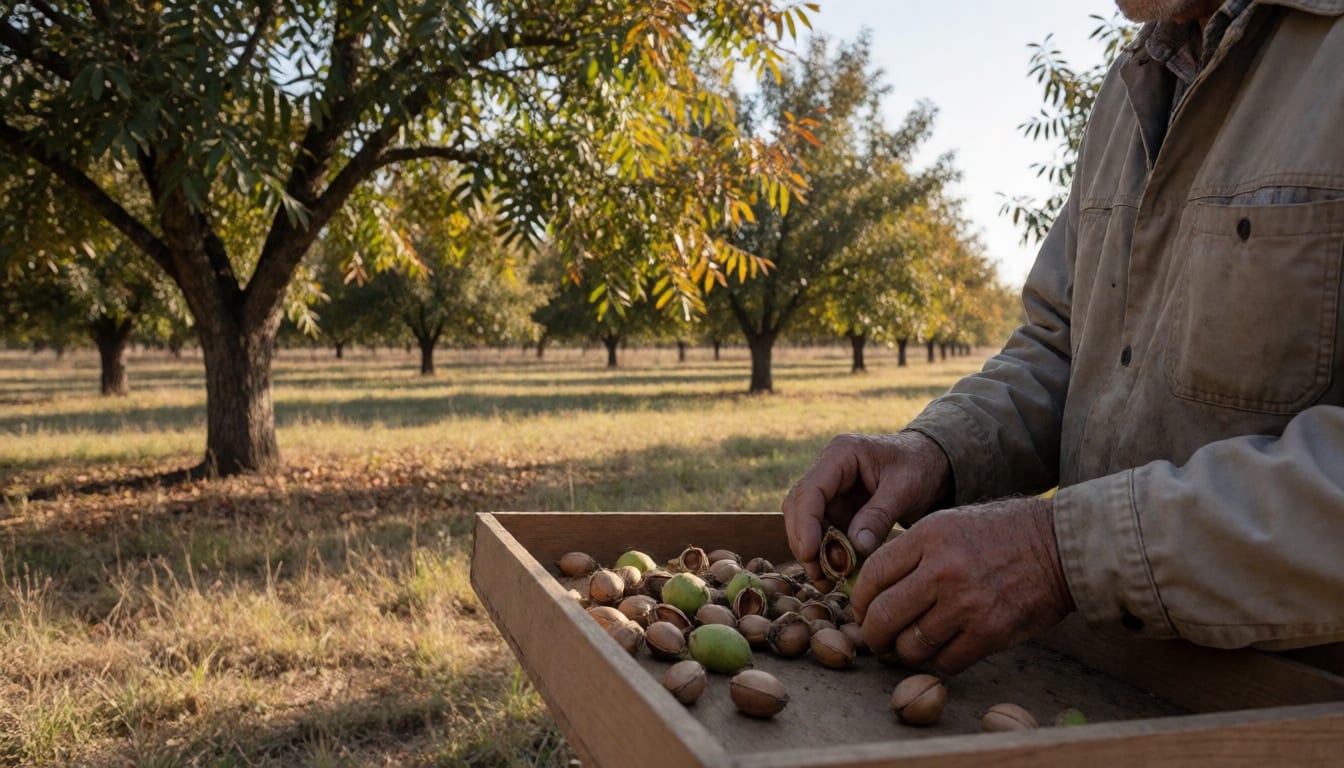
A tin of Texas pecans can be a fine Christmas gift. So can a box of pecan candy or a pie made for someone down the road.
But before those treats reached gift boxes and holiday tables, someone had to figure out how to grow better pecans, year after year, on a larger scale.
That part of the story leads to San Saba County, an English immigrant named Edmond E. Risien and a native pecan tree that became known as the Mother Pecan Tree.
It wasn't decorated for Christmas in the records we've reviewed. It didn't become famous because of a holiday festival.
It mattered because of the nuts it produced, the attention one grower paid to it and the years of work that followed.
And that's a story worth remembering whenever Texas pecans return to our Christmas tables.
The tree that caught a pecan grower's attentionEdmond E. Risien came to San Saba County in the nineteenth century. He was a cabinetmaker by trade, according to Texas A&M Forest Service, but he became deeply interested in improving native pecans.
He understood something important: not every pecan tree produces the same kind of nut.
Some trees offer better flavor, thinner shells or more dependable crops. For a grower trying to make pecans into a reliable business, those differences matter.
Risien organized a local pecan competition to identify especially good specimens.
Texas A&M Forest Service tells how he followed the winning entry back to its source. The tree had been badly cut back. According to the account, just one large limb remained because the owner had used it as a place to stand while cutting other branches for the nuts.
Risien recognized the value of the tree and eventually bought it along with the land where it grew.
The tree recovered and began producing more of its prized pecans.
The USDA's Agricultural Research Service identifies 1882 as the year Risien discovered the tree that became known as the Mother San Saba.
That ordinary-sounding discovery became an important part of Texas agricultural history.
Why one good tree wasn't enoughFinding an excellent pecan tree was only the beginning.
A pecan grown from seed will not necessarily be an exact copy of its parent. If growers want trees that reliably produce desirable fruit, they need methods that preserve or improve useful traits.
Risien tried different approaches.
He experimented with grafting and budding, ways to join growing material from a desirable tree to another tree or rootstock. He also worked with controlled pollination, carrying pollen from selected trees to the Mother Pecan Tree.
Texas A&M Forest Service describes him riding on horseback in search of suitable pollen sources.
This was careful, repeated work. The goal was not simply to grow another pecan tree. It was to develop trees with qualities that farmers and customers could count on.
The USDA connects the Mother San Saba with varieties including San Saba Improved, Sovereign, Onliwon and Texas 60.
Those names might not mean much to someone standing in a grocery aisle today. But they help explain why the tree earned its unusual title.
It became part of a breeding program that reached well beyond the original riverbank.
How San Saba became pecan countrySan Saba County already had native pecan trees along its waterways before Risien began his work.
What changed in the late nineteenth century was the effort to turn that natural abundance into a more organized agricultural industry.
Risien established the West Texas Pecan Nursery and helped show that selecting and propagating superior trees could be a business, not just a hobby.
His work became important enough that the Texas Historical Commission commemorated him with a marker in San Saba. The marker recognizes his contributions to pecan improvement and records varieties associated with his work.
Over time, other growers and families expanded the area's orchards and pecan businesses.
That's part of how San Saba came to call itself the Pecan Capital of the World. The phrase is a local identity and promotional title, not a claim that San Saba produces every pecan sold in Texas.
The deeper story is about growers learning from local conditions, improving their methods and building businesses that continued beyond one generation.
The family history that reaches into today's gift boxesThe Mother Pecan Tree's legacy didn't end with Risien's own experiments.
Millican Pecan, a San Saba business with roots in the Risien family, traces its orchard history to the land he developed. Its published family account describes later generations caring for the orchard and building a business around pecans and pecan gifts.
The company also shares a family story about Elsie Oliver Millican, who made pecan pies for newcomers to the community.
That's a lovely example of the way a crop can become more than a product. A pecan pie can also be a welcome.
We should be careful about what the story proves. The account comes from the family's own business history, not an independently recorded interview for this article. It is not evidence that the pies were delivered specifically at Christmas.
Still, it illustrates the connection between local agriculture, family businesses and the everyday practice of sharing something made close to home.
That connection continues in San Saba today.
What a San Saba Christmas gift looks like nowSeveral San Saba pecan businesses offer the kinds of treats people might bring to a Christmas gathering or send as a gift.
Oliver Pecan Company advertises gift tins, chocolate-covered pecans, flavored nuts, gift baskets and seasonal gift items.
Millican Pecan offers orchard-grown pecans and gift products connected to its long family history.
Alamo Pecan & Coffee Company sells pecans and specialty gifts, and a September 2026 San Saba County Chamber of Commerce profile discusses its custom gifting work and local ties.
Those businesses are not all the same company, and their individual histories should not be folded into one story.
What connects them is the broader pecan industry that has helped shape San Saba.
If you're choosing a holiday gift, looking at what those businesses actually grow, make or package can be more useful than buying something based on a slogan alone.
Check current product availability, shipping cutoffs and store arrangements directly with the business. No specific 2026 Christmas delivery guarantee has been established for this article.
What to know before visiting San SabaSan Saba's pecan history offers a reason to explore the town beyond its gift shelves.
One accessible starting point is the historical marker honoring Edmond E. Risien on the San Saba County Courthouse grounds. The Texas Historical Commission places it on the north side of the courthouse facing Wallace Street.
The marker tells part of the story of the grower whose work helped make San Saba known for pecans.
But the courthouse marker and the original Mother Pecan Tree are not the same place.
We have not verified public access to the original tree. Millican Pecan's own account says visitors are not allowed near it. Don't assume a historic tree on private property is an open roadside attraction.
For a broader look at the industry, the San Saba County Chamber of Commerce and local tourism resources can help readers identify established shops and public destinations.
If you're making a special trip, confirm hours and access before leaving home, particularly around Thanksgiving and Christmas.
A story bigger than one treeWhat makes the Mother Pecan Tree interesting isn't only its age or the unusual way Risien discovered it.
It's what happened because someone noticed its potential.
Risien studied the tree, experimented with ways to produce better pecans and helped establish the foundation for a local agricultural industry.
Families and businesses carried parts of that work forward. San Saba's pecan identity grew from many years of farming, processing, selling and sharing.
So the next time a pecan pie appears at Christmas dinner or a gift tin arrives from the Texas Hill Country, there's a little more history behind it than we might expect.
Not every tree becomes famous. This one helped grow something that lasted.
Quick FactsHistorical subject: The San Saba Mother Pecan Tree Location: San Saba County, Texas Pecan pioneer: Edmond E. Risien Documented discovery year: 1882, according to USDA Agricultural Research Service Why it mattered: Selection, controlled pollination, grafting and development of improved pecan varieties Historical marker: Edmond E. Risien, Pecan Pioneer Public marker location: San Saba County Courthouse grounds, north side facing Wallace Street Original tree access: Not established as public; do not assume access Modern connection: San Saba pecan orchards, candy makers and gift businesses Christmas connection: Contemporary pecan gifting and baking, not a documented Christmas tradition at the original tree
Sources and Further ReadingTexas A&M Forest Service: Famous Trees of Texas, San Saba Mother Pecan USDA Agricultural Research Service: Mother San Saba Pecan Research Texas Historical Commission: Edmond E. Risien Historical Marker City of San Saba: County History Millican Pecan: Family and Orchard History Oliver Pecan Company: Gift Collection San Saba County Chamber of Commerce: Alamo Pecan & Coffee Company Spotlight
Research Note: Historical and business sources were reviewed November 23, 2026. The original tree's current condition and public accessibility were not independently inspected. Product selections, holiday hours, order deadlines and shipping availability can change; check directly with the businesses before purchasing or traveling. Family-history anecdotes are attributed to the businesses that publish them. |
0 Comments
Join the conversation
Be the first to comment
Share your thoughts above.