

Can You Legally Sell Homemade Christmas Tamales in Texas? What the 2026 Rules Say |
Texas expanded its cottage-food law, but the filling in your tamales still matters. Here's what home cooks, holiday sellers and customers should understand. |
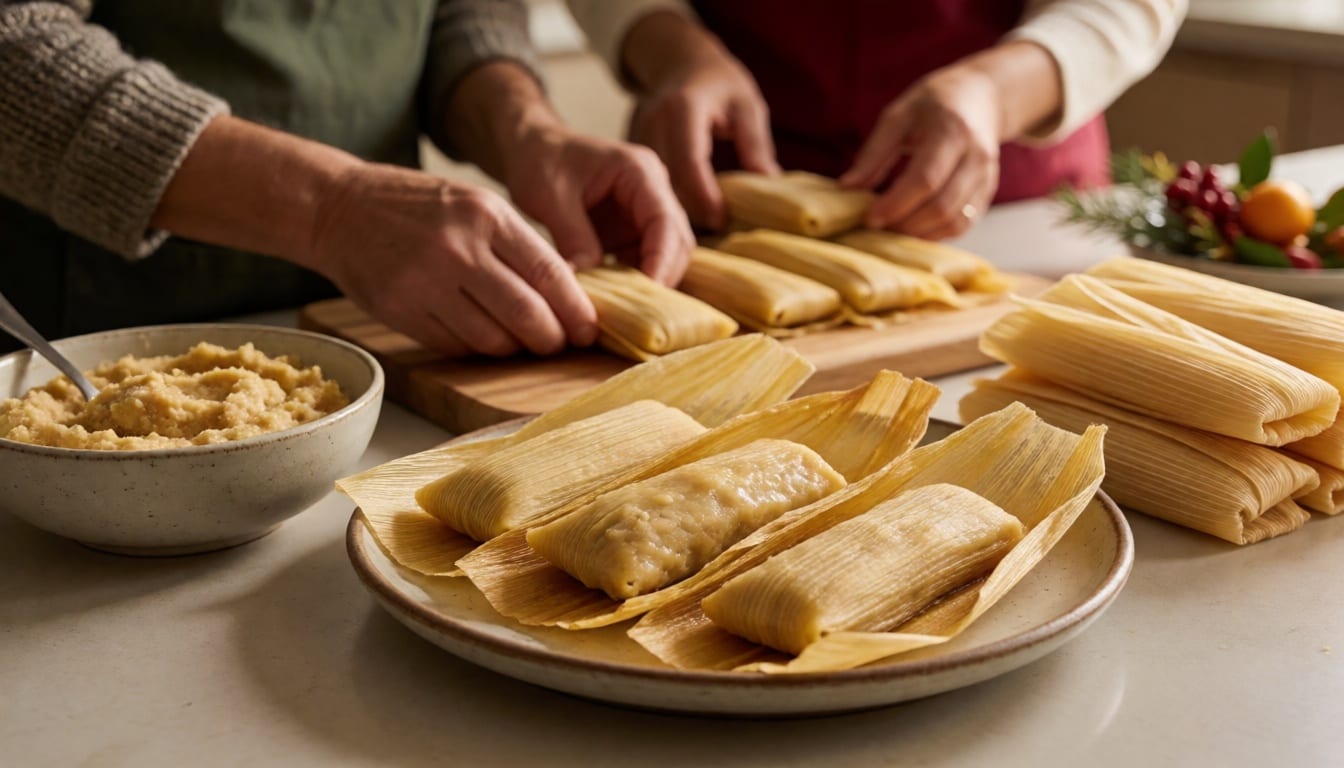
Around Christmas in Texas, a dozen tamales can carry a lot of family history. Some families spend an entire day mixing masa, preparing fillings and wrapping corn husks. Others have a favorite local tamale maker they call every December.
But when a home cook starts selling tamales to neighbors, friends or customers online, a different question comes up: what does Texas food law actually allow?
The answer changed in 2025, when Texas expanded its cottage-food law. Yet one important restriction remained.
Homemade tamales containing meat or poultry still do not qualify for sale under Texas's cottage-food exemption. Some meat-free varieties may qualify, provided the seller follows the rules that apply to the particular product.
That distinction matters to anyone planning to sell holiday tamales, and to customers who want to understand where their food comes from.
What Changed in Texas Cottage-Food Law?
Texas Senate Bill 541, effective September 1, 2025, broadened the foods that qualifying home-based cottage-food operations may sell.
The law now allows certain foods that require time and temperature control for safety, often called TCS foods. It also raised the cottage-food operation's annual gross-income threshold to $150,000, subject to the statute's inflation adjustment, and established registration and labeling requirements for producers selling TCS foods.
But the expansion did not remove every product restriction.
Under Texas Health and Safety Code Chapter 437, meat, meat products, poultry and poultry products remain outside the cottage-food definition. The law also excludes seafood, certain ice products, low-acid canned goods, raw milk products and products containing CBD or THC.
For tamales, that means the filling can change the legal answer.
Pork and Chicken Tamales Are Still Excluded
Consider a home cook who makes pork tamales for Christmas and wants to sell several dozen to neighbors.
Even if the cook completes a food-handler course, labels the packages, registers with DSHS and keeps the tamales properly refrigerated, those steps do not make pork tamales eligible cottage foods.
The meat exclusion is separate from the temperature-control rules. Registration for TCS foods does not override it.
The same principle applies to chicken, beef and other meat-filled tamales.
That does not mean no one in Texas can sell pork tamales. Restaurants, permitted food establishments and other properly authorized operators can sell foods containing meat under the regulations that apply to their businesses.
It means a home cook cannot use the cottage-food exemption alone as permission to sell meat-filled tamales.
Someone who wants to sell those products should contact the local health authority or the Texas Department of State Health Services before starting sales, determine which food-establishment requirements apply, and arrange for an appropriate approved preparation facility.
A food-handler certificate by itself is not a retail food permit.
What About Bean, Cheese or Other Meat-Free Tamales?
This is where the expanded law creates a different opportunity.
Tamales made without meat or other excluded ingredients may qualify under the cottage-food rules. Bean tamales, for example, are not automatically excluded simply because they are tamales.
But the recipe, ingredients, storage requirements and selling method still matter.
A meat-free product that requires refrigeration or hot holding may be a TCS food. Texas now permits eligible TCS foods under the cottage-food framework, subject to additional safeguards.
According to DSHS cottage-food guidance, qualifying producers selling TCS foods must register with the state, use safe temperature controls and meet special labeling requirements.
The state identifies 41°F or below for cold storage and 135°F or above for hot holding as relevant limits for TCS cottage foods.
A seller should not assume that a vegetarian recipe is shelf-stable or safe to keep at room temperature. Ingredients such as cooked beans, cheese and moist masa can affect the food's safety classification.
Before selling a particular meat-free tamale recipe, the producer should determine whether it qualifies, whether it requires temperature control, and which rules apply.
The Label Matters, Too
Texas cottage-food labeling rules help customers understand what they are buying.
For eligible cottage foods, the label generally must identify the producer, provide the producer's address or a qualifying DSHS identification number, name the food and disclose major allergens when present.
The law also requires a prominent notice explaining that the product was made in a private residence that is not subject to government licensing or inspection.
For eligible TCS cottage foods, the label must include the date the food was made. Additional safe-handling instructions must appear on the label or accompanying invoice or receipt.
These are requirements for foods that actually qualify under the cottage-food law. A properly printed label does not make an excluded meat product eligible.
Can Someone Take Orders Online or Sell at a Market?
Texas allows qualifying cottage-food operators to accept online orders under specific conditions.
The law requires the consumer to purchase directly from the operator. The operator, an employee or a household member must personally deliver the product, and required labeling information must be supplied online before payment.
Eligible non-TCS cottage foods may also be sold through registered cottage-food vendors under the expanded rules. TCS cottage foods are not eligible for that wholesale channel.
A farmers' market, neighborhood event or online ordering page does not eliminate the underlying product restrictions.
That is why sellers need to identify the applicable legal category before choosing a sales method.
For meat-filled tamales sold through a permitted food establishment, different food-service, temporary-event or retail regulations may apply. The specific requirements depend on the business and the jurisdiction.
What Customers Should Ask Before Buying Holiday Tamales
Most customers are not trying to audit a food business. They want a good meal that has been prepared and handled safely.
Still, a few practical questions are reasonable.
Ask what is in the filling, especially if someone in the family has a food allergy. Ask whether the tamales are being sold hot, refrigerated or frozen, and how they should be stored after pickup.
If they contain meat, you can ask whether they were prepared through a permitted food business. A seller's participation in a neighborhood group or social-media marketplace does not establish that status.
For any perishable tamales, avoid leaving them sitting at room temperature throughout a party or a long drive. FoodSafety.gov recommends refrigerating perishable foods within two hours, or within one hour when the temperature is above 90°F.
When reheating leftovers, the federal food-safety recommendation is an internal temperature of 165°F, measured with a food thermometer.
These food-safety steps matter whether tamales came from a restaurant, a holiday order or a family kitchen.
Buying Homemade Tamales? Five Questions Worth Asking
There's nothing wrong with enjoying homemade holiday tamales. For many Texas families, they're an important Christmas tradition. But if someone offers to sell you tamales from a cooler, a vehicle, a social-media post or your front door, it is reasonable to ask a few questions before purchasing. What's in the tamales? Pork, chicken, beef, cheese and other ingredients can affect food-safety requirements and possible allergens. Where were they prepared? If they contain meat, ask whether they were prepared through an appropriately permitted food operation. A home-kitchen cottage-food registration alone does not authorize meat-filled tamale sales. How have they been stored and transported? Perishable tamales need appropriate hot or cold temperature control. Do not assume a cooler keeps food at a safe temperature. When were they made? Ask about preparation dates, storage instructions and when they should be eaten or frozen. How should they be reheated? Follow safe reheating guidance and use a food thermometer. Leftovers should generally reach 165°F.
A friendly seller, a familiar neighborhood or a delicious-looking product cannot establish food safety or legal compliance. These questions are not accusations. They're practical ways to protect your family while supporting responsible local cooks and businesses. A permit is not a guarantee of food safety, either. Proper preparation and handling matter at every step.
Homemade Does Not Mean the Same Thing as Unregulated
Christmas tamales are a longstanding part of Texas family life. The law does not prevent families from preparing them at home for their own celebrations.
The legal issue arises when the food is produced and sold as part of a business.
Texas has expanded the choices available to qualifying cottage-food producers. Some cooks now have opportunities to sell products that would not have qualified under the older rules.
But the distinction between meat-filled and qualifying meat-free tamales remains important, especially during a season when orders can grow quickly.
For home cooks, checking the rules before taking paid orders can prevent an avoidable problem. For customers, knowing the difference helps them make more informed buying decisions.
There's plenty of room in a Texas Christmas for family recipes, neighborhood businesses and safe holiday traditions. The important thing is to know which rules apply before the first dozen is sold.
Quick Facts: Texas Holiday Tamale Sales
Current law: Texas Health and Safety Code Chapter 437, as amended by SB 541 Major expansion effective: September 1, 2025 Pork, beef and chicken tamales: Excluded from the cottage-food exemption Meat-free tamales: May qualify, depending on ingredients and compliance Eligible refrigerated TCS products: DSHS registration and additional controls required TCS cold storage: 41°F or below TCS hot holding: 135°F or above Cottage-food gross-income threshold: $150,000 annually, subject to statutory inflation adjustment Food-handler training: Required under the cottage-food provisions Retail meat-filled tamale sales: Require compliance with the separately applicable food-business rules DSHS food-safety contact: 512-834-6753 Official guidance: Texas Cottage Food Production
Legal and Regulatory Information Disclaimer: This article is provided by Texas Shoutouts for general educational and informational purposes only. It summarizes our understanding of publicly available Texas laws and guidance from the Texas Department of State Health Services as of November 22, 2026.
Texas Shoutouts is not a law firm, and its writers are not acting as attorneys or licensed regulatory advisers. Nothing in this article constitutes legal advice, establishes an attorney-client relationship, or determines whether any particular recipe, food product, kitchen, vendor or business complies with applicable laws.
Laws, regulations, agency interpretations and local permitting requirements may change. Anyone planning to sell food should confirm current requirements with the appropriate regulatory authority and consult a qualified Texas attorney when legal guidance about their specific circumstances is needed.
Sources and Further Reading
Texas Health and Safety Code, Chapter 437 - current statutory definitions, exclusions, sales provisions and cottage-food requirements Texas Legislature: Senate Bill 541 - summary of the 2025 cottage-food expansion Texas DSHS: Cottage Food Production - eligibility, registration, TCS handling and labeling Texas DSHS: Retail Food Establishment Permits - food-business permitting information Texas DSHS: Meat Safety Processing and Sales FAQ - meat-product sales and regulatory distinctions FoodSafety.gov: Four Steps to Food Safety - safe storage, handling and cooling guidance |
0 Comments
Join the conversation
Be the first to comment
Share your thoughts above.