Why Nacogdoches Celebrates Christmas Under Nine Flags |
Most Texans know the state's six flags. Nacogdoches remembers nine, including three short-lived independence movements. Here's the history behind an East Texas Christmas tradition. |
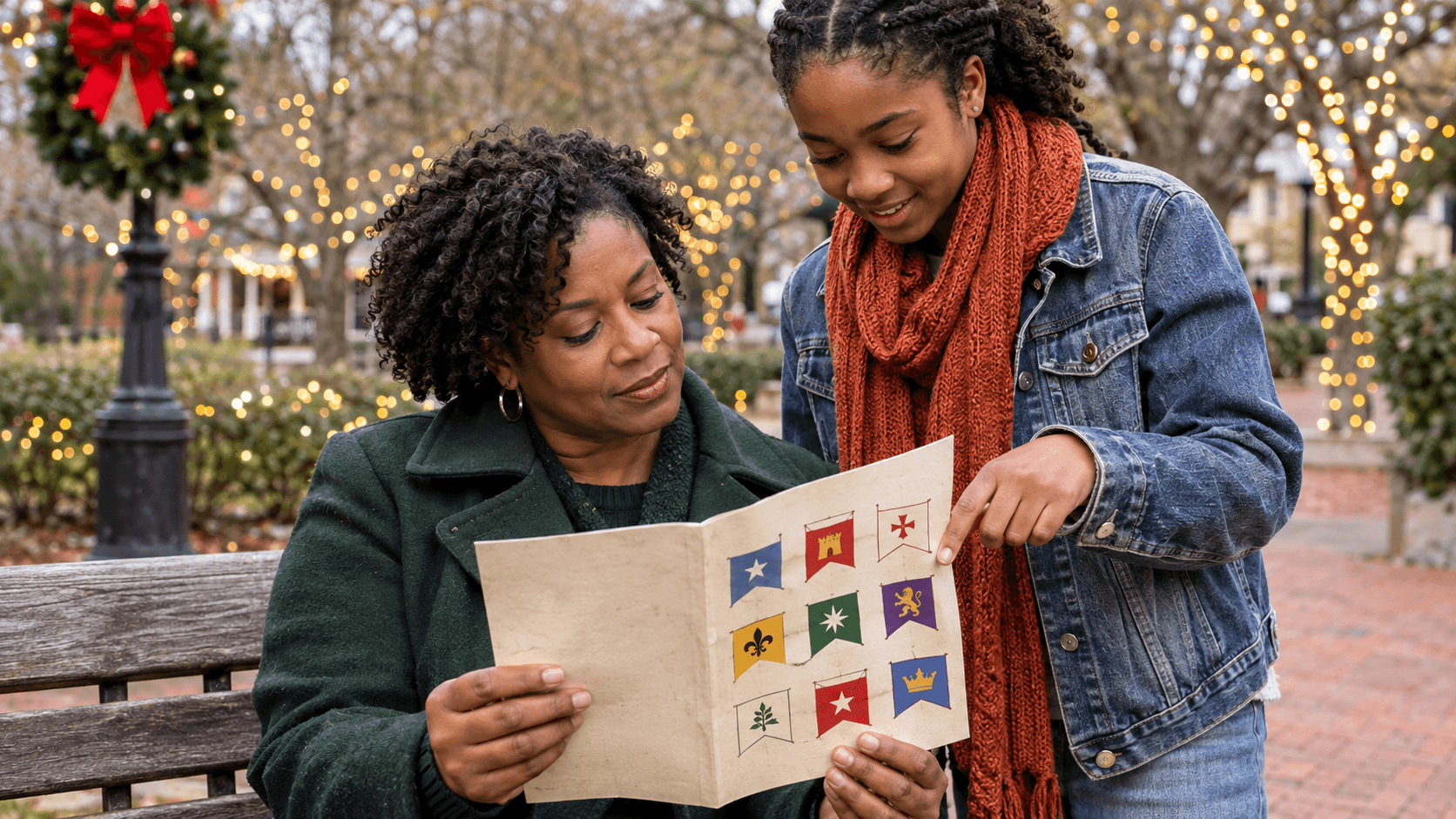
When Christmas lights come on along the red-brick streets of downtown Nacogdoches, they brighten a place with more history than most of us can take in during one evening.
The East Texas city celebrates the season with its Nine Flags Christmas Festival. There are lights, decorated floats, music, shopping and neighbors gathering downtown.
But that name raises a question worth asking: Why nine flags?
Most Texans know the familiar six flags associated with the state's history. Nacogdoches counts three more, each linked to a short-lived attempt to establish an independent government.
The full story includes Spanish settlement, Mexican Texas, failed rebellions, a republic, the Civil War and the United States. It also reaches back to the Caddo people, whose history in this part of East Texas began long before any of those flags appeared.
Understanding that history adds something lasting to a Christmas visit. The festival's name is not just a decoration. It points to the many times this community found itself caught up in struggles over who would govern Texas.
Before the flags, there were the Caddo peopleAny account of the nine flags needs to begin with the people who were here first.
The Nacogdoche people were part of the Hasinai Caddo communities of East Texas. They lived, farmed, traded and maintained relationships across the region long before European powers claimed territory on a map.
The Texas State Historical Association identifies the Nacogdoche as a Caddoan people who lived near present-day Nacogdoches in the seventeenth and eighteenth centuries.
The town's name itself carries that history forward.
Spanish missionaries entered the region in the early eighteenth century. They established Nuestra Señora de Guadalupe de los Nacogdoches in 1716, beginning a new chapter of colonial settlement and conflict.
Later, Antonio Gil Y'Barbo helped establish the Spanish town of Nacogdoches in 1779.
Those dates are important. But they don't mark the beginning of the area's human story, and the nine-flag count should never be mistaken for a complete history of everyone who lived here.
The six familiar flags, with a Nacogdoches story of their ownSix of the nine flags are the ones associated with Texas history across the state.
Spain represents the colonial claims, missions and settlements that shaped early Nacogdoches.
France represents a competing European presence in the wider Texas region. This flag needs some care in the telling. Visit Nacogdoches notes that the French did not establish a lasting settlement in East Texas, even though French exploration and activity influenced Spanish decisions.
Mexico governed Texas after independence from Spain in 1821. During the Mexican period, Nacogdoches became a place where long-established residents, new settlers and government officials sometimes disagreed sharply over land and authority.
The Republic of Texas followed the successful independence movement of 1836. Nacogdoches had already played a part in earlier resistance to Mexican military authority, including the local conflict of 1832.
The United States became the governing nation after Texas joined the Union in 1845, a relationship interrupted during the Civil War.
The Confederate States of America represents Texas' participation in secession and the Confederacy from 1861 to 1865. That chapter must be understood alongside the history of slavery, the war and its consequences. Naming a flag as part of the historical record is not an endorsement of what it represented.
Those six flags already cover major changes. So where do the other three come from?
That's where Nacogdoches becomes especially interesting.
The Gutiérrez-Magee expedition: An early fight for independenceThe first additional flag belongs to the Gutiérrez-Magee expedition of 1812 and 1813.
Bernardo Gutiérrez and Augustus Magee joined forces in an effort to challenge Spanish authority. Their movement drew supporters into Texas and briefly controlled territory.
The Texas Historical Commission describes its flag as an emerald banner.
Visit Nacogdoches places the expedition in the story of the Old Stone Fort, an important local landmark associated with several attempts to establish a new government.
The effort did not last. Spanish royalist forces defeated the movement, and its supporters could not maintain control.
It never became a lasting independent Texas government.
But its flag remains part of the nine because the expedition was an early challenge to the political order that governed the region.
James Long's republic: A government that did not lastThe next extra flag belongs to James Long, who led an independence movement beginning in 1819.
Long established a short-lived government centered in Nacogdoches while Spanish authorities still claimed Texas.
The Texas Historical Commission describes his banner as red and white stripes with a single white star on a red field.
Long's effort failed, as did a later attempt. He did not establish a lasting republic.
That distinction is important because the name "Long Republic" can sound like a period of stable national government. It was not.
What it represents is another moment when Nacogdoches became a center for people who hoped to change Texas' political future.
For residents reading the story today, it is a reminder that history often includes plans that never worked out, not just the governments that survived.
Fredonia: The rebellion tied directly to NacogdochesThe third additional flag comes from the Republic of Fredonia, proclaimed in 1826.
Haden Edwards had received a Mexican colonization contract connected to the Nacogdoches area. Disputes developed over settlement, land claims and his authority.
Those disputes involved people who were already living on the land, including Indigenous communities and residents with earlier ties to the region.
After Mexican officials revoked Edwards' contract, he and his supporters declared an independent republic.
The Texas Historical Commission describes the Fredonian flag as red and white, with words invoking independence, freedom and justice.
But the rebellion failed in 1827.
It is a striking chapter in the city's history because it raises questions about what independence meant to different people. One person's promise of freedom could collide with another person's land rights or security.
That is part of the fuller story worth telling, even during a holiday season built around community celebration.
How nine flags became a community traditionOver time, those three extra flags became part of the way Nacogdoches explains its distinctive place in Texas history.
The Texas Historical Commission's Nine Flags of Nacogdoches marker sets out the six familiar flags and the three additional movements.
According to that marker, residents began celebrating a Nine Flags festival in 1997.
In 2001, the Texas Legislature approved House Concurrent Resolution 239, honoring the Nine Flags Festival for helping people learn about the county's heritage.
That recognition tells us the history theme had become more than a collection of old dates. It was part of a community effort to bring local heritage into public life.
Today, Visit Nacogdoches uses the Nine Flags name for its Christmas Festival, which brings holiday activities into the historic downtown area each November and December.
The public records do not establish that every feature of the current Christmas celebration has been held continuously since 1997. What they do establish is a longstanding Nine Flags heritage theme that remains part of the town's seasonal identity.
That's an important distinction when we look back at the festival's beginnings.
Christmas lights and an unusually layered hometown storyA visitor coming to Nacogdoches for Christmas may first notice the downtown lights, a decorated storefront or the sound of a holiday gathering.
Those things are worth enjoying on their own.
But there is another reason to pay attention to the surroundings.
Nacogdoches was a crossroads long before the modern holiday festival. Its streets and public spaces connect visitors with stories of Indigenous communities, colonial governments, merchants, settlers, political conflicts and changing borders.
Historic markers and local museums help tell those stories outside the festival season, too.
The Nine Flags of Nacogdoches historical marker is associated with the downtown area around 200 East Main Street. The nearby visitor center can be a starting point for learning more about local history.
Visitors who want to explore further can consult the Texas Historical Commission's marker records, the city's history resources and the Texas State Library and Archives Commission's Nacogdoches archival collection.
Those resources provide a different kind of visit from an evening spent watching the parade. Both experiences have value, but they answer different questions.
What families can learn from the nine flagsThere is a simple question that can make the story worth sharing with a younger visitor: Were all nine flags the flags of countries that successfully governed Nacogdoches?
No.
Some represent governments that controlled Texas for years. Others belong to short-lived movements that failed.
The Gutiérrez-Magee expedition, James Long's movement and the Republic of Fredonia are the three names that make Nacogdoches' flag count different from the familiar statewide six.
Another question matters just as much: Who lived here before those governments?
The Nacogdoche and other Caddo peoples were part of the region's history long before European colonization.
And a final question is worth asking whenever we look at an old flag: What did that government or movement mean for the people living under it?
The answer will not always be the same for everyone.
That is what makes history more valuable than a simple list of names.
More than a name on a Christmas bannerThe Nine Flags Christmas Festival is a present-day way for Nacogdoches to gather as a community while keeping its past close at hand.
But the history behind the name is not a neat story of nine governments taking turns.
It includes Indigenous people who lived here first, colonial claims, unsuccessful independence efforts, the creation of Texas, the Civil War and the life of a town that endured through those changes.
Knowing that does not take anything away from the Christmas lights.
It gives the celebration a deeper connection to the place where it happens.
And the next time you see the Nine Flags name in Nacogdoches, you'll know why this East Texas town remembers three flags more than most of the state.
Quick FactsSubject: The Nine Flags of Nacogdoches Location: Nacogdoches, East Texas Six statewide flags: Spain, France, Mexico, Republic of Texas, United States and Confederacy Three additional Nacogdoches flags: Gutiérrez-Magee expedition, James Long's republic and Republic of Fredonia Historical movements: 1812–1813, beginning in 1819, and 1826–1827 respectively Earlier history: Nacogdoche people of the Hasinai Caddo communities Nine Flags festival history: Local celebration documented from 1997 Legislative recognition: Texas HCR 239, 2001 Modern Christmas connection: Nine Flags Christmas Festival, held annually in downtown Nacogdoches Historic marker area: 200 East Main Street, Nacogdoches, Texas Reader reminder: This is a history explainer, not the 2026 Christmas parade planning guide
Sources and Further InformationTexas Historical Commission: Nine Flags of Nacogdoches Historical Marker City of Nacogdoches: History of Nacogdoches Visit Nacogdoches: History of the Nine Flags Visit Nacogdoches: Nine Flags Christmas Festival Texas Legislative Reference Library: HCR 239, 2001 Texas State Historical Association: Nacogdoche Indians Texas State Library and Archives Commission: Nacogdoches Archives Stephen F. Austin State University: About Nacogdoches
Research Note: Official historical, archival and festival sources were reviewed November 23, 2026. The nine flags include both longstanding governments and unsuccessful independence movements. The dates in different historical summaries may reflect claims to territory rather than actual local government. The Nine Flags festival's documented beginning in 1997 does not establish that every modern Christmas event dates to that year. No interviews, firsthand event attendance or unpublished archival discoveries are claimed. |
0 Comments
Join the conversation
Be the first to comment
Share your thoughts above.