

From the Rio Grande Valley to the Christmas Table: The Story of Texas Red Grapefruit |
From a surprising discovery in a South Texas citrus grove to Christmas gift boxes sent across the country, our official state fruit carries nearly a century of Texas agricultural heritage. |
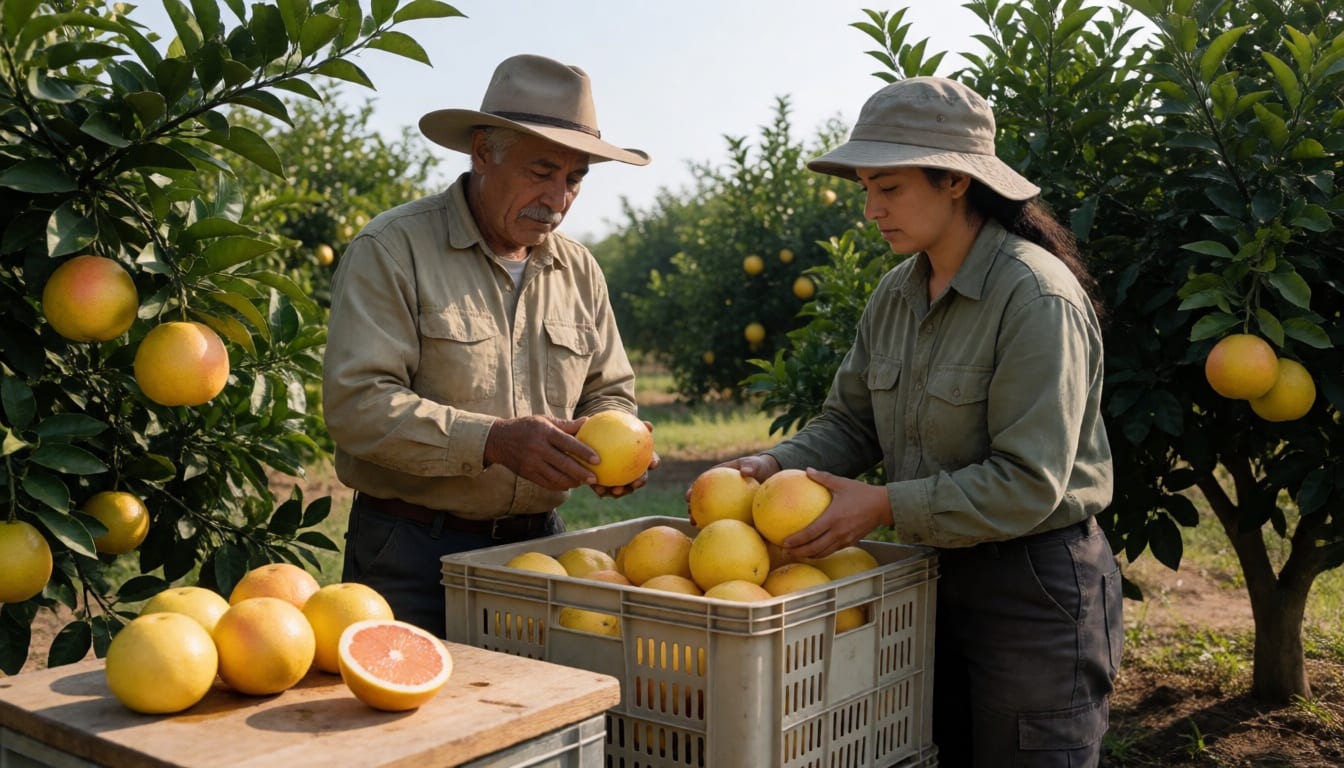
Christmas red takes on a different meaning when you spend December in the Rio Grande Valley.
While much of the country is settling into winter, South Texas citrus growers are gathering a crop that brings a little sunshine to holiday tables.
Cut into a Texas red grapefruit, and you will find a color that looks right at home alongside the season's decorations.
But there is more to that fruit than its appearance.
Behind it is a story of patient growers, unexpected discoveries, agricultural research and generations of Texas families who have earned their living from the land.
It is also a story about Christmas gifts.
Long before online shopping made it easy to send a package across the country, Texans were arranging to have fresh Valley grapefruit delivered to friends, relatives and business associates for the holidays.
That tradition connects our Christmas tables with a part of Texas worth getting to know.
How the Rio Grande Valley Became Citrus Country
The Lower Rio Grande Valley has a growing season that makes it possible to raise crops that would struggle through colder winters elsewhere in Texas.
Its subtropical climate helped establish the region as an important center for commercial citrus production.
Building that industry took considerable work.
Growers needed irrigation, suitable land, healthy trees and reliable ways to transport fruit to distant markets.
Among the early developers was John H. Shary, whose investments in land, irrigation and citrus production helped expand the Valley's agricultural economy.
According to Texas A&M AgriLife Extension's historical account, the region sent out its first commercial citrus shipment in 1920.
The fruit traveled in crates originally intended for onions.
It was a practical beginning for an industry that would eventually become known for something many early growers had not expected: grapefruit with red flesh.
The Discovery That Changed Texas Grapefruit
The grapefruit grown commercially in Texas was not always the deep red fruit we recognize today.
Early orchards produced white-fleshed varieties, followed by pink grapefruit.
Then, in 1929, something unexpected happened in South Texas.
Growers discovered branches producing grapefruit with a deeper red interior than the fruit normally found on their trees.
These changes can occur naturally when a mutation develops in part of a plant. Growers can then propagate promising new growth to preserve its characteristics.
One of the discoveries was made by McAllen citrus grower A. E. Henninger.
His Ruby Red grapefruit received a United States plant patent in 1934.
That discovery helped set Texas citrus apart in the marketplace.
The fruit had an appealing appearance, and it gave growers an opportunity to offer customers something distinctive from the grapefruit they already knew.
But the original Ruby Red was only the beginning.
Agricultural researchers and growers continued working to develop varieties with richer color and desirable growing and eating qualities.
Their work would help make red grapefruit one of the best-known agricultural products associated with Texas.
Ruby Red, Star Ruby and Rio Red Are Not Quite the Same
Many people use the name Ruby Red whenever they talk about red grapefruit from Texas.
There is an understandable reason for that. Ruby Red became closely associated with the state's citrus industry.
But it is worth knowing that several different varieties helped build that reputation.
Ruby Red: The historic red-fleshed variety associated with the 1929 discovery and Henninger's 1934 patent. Star Ruby: Introduced in 1970, following agricultural research aimed at developing grapefruit with deeper interior color. Rio Red: Introduced in 1984, another important development in Texas grapefruit breeding, known for its deep red flesh.
You may also encounter the names Ruby-Sweet and Rio Star when shopping for Texas grapefruit.
These names have been used as commercial marketing categories covering particular groups of red grapefruit varieties.
They are not simply alternate names for the original Ruby Red.
For most families, there is no need to remember every detail of grapefruit breeding before going grocery shopping.
But knowing a little about the varieties helps explain why grapefruit from the same general region can have different shades of red.
It also gives us an appreciation for the years of work that went into developing the fruit we enjoy today.
A Christmas Gift That Traveled Well Beyond South Texas
One of the most interesting pieces of Texas grapefruit history survives in an ordinary business letter.
On November 6, 1951, Isaac Herbert Kempner wrote to Alamo Fruit Distributors to ask about having grapefruit sent as Thanksgiving or Christmas gifts.
He also wanted to know whether pink or red grapefruit could be shipped.
That letter is preserved by the Rosenberg Library and can be explored through the University of North Texas Libraries' Portal to Texas History.
It offers a small but meaningful glimpse into how Texans were already sharing the Valley's citrus harvest during the holidays 75 years ago.
A box of fruit made a practical gift.
It could be shared around a family breakfast table, given to guests or enjoyed a little at a time throughout the holiday season.
The gift also carried something of the place where it was grown.
For relatives living in colder parts of the country, receiving Texas citrus during the winter meant enjoying fresh fruit from a region with a very different growing season.
The Valley's growers and fruit shippers built businesses around that opportunity.
Crockett Farms, for example, traces its nationwide gift-fruit business to a family decision in the 1960s to share its citrus with customers beyond South Texas.
The company's history illustrates how a family agricultural business could develop a direct connection with households hundreds of miles away.
How Grapefruit Became the Official State Fruit
By the early 1990s, red grapefruit had become closely tied to the agricultural identity of Texas.
In 1993, the Texas Legislature adopted House Concurrent Resolution 75, designating Texas Red Grapefruit as the official fruit of the state.
It was a fitting recognition of an industry built through decades of agricultural development.
The designation was not simply about the color or taste of a particular fruit.
It also acknowledged the contribution of a region that had developed something distinctively its own.
Our state symbols offer an interesting way to learn about Texas.
The pecan tree tells part of our agricultural and natural history. The red grapefruit tells another part, rooted in the orchards, research facilities and packing businesses of the Rio Grande Valley.
Both remind us that the things we recognize as Texas traditions often begin with people doing patient, everyday work.
What Valley Growers Are Facing This Christmas
The 2026 citrus season is a reminder that farming remains an unpredictable business.
In its November 6 reporting, Texas Farm Bureau described growers preparing for harvest following an especially hot and dry summer.
Those conditions affected the size of the fruit in some orchards.
November agricultural reporting based on Texas A&M AgriLife Extension information also indicated that fresh-fruit shipments were running behind the previous season.
At the same time, the first crop estimate from the Texas Valley Citrus Committee projected grapefruit production about 10 percent higher than last season.
Early orange production was projected to rise by about 50 percent.
Those are initial estimates, not final harvest figures.
A larger expected crop does not necessarily mean that all the fruit will be ready for market at the same time.
Growers must consider whether the fruit has reached suitable size and maturity. Packing and shipping arrangements also affect when it reaches grocery stores and customers.
For families buying citrus this Christmas, the important thing to remember is that agriculture works on a different schedule from most retail businesses.
A grapefruit is not something a farmer can manufacture to meet a holiday delivery deadline.
It depends on a living tree, the weather and the care provided throughout the growing season.
That makes the fruit on our Christmas tables worth appreciating.
Bringing a Little Valley Sunshine Into the Holiday Kitchen
Texas grapefruit does not require an elaborate recipe to become part of a Christmas meal.
A few fresh grapefruit halves can add color to a holiday breakfast. Sections of fruit can be served in a simple fruit bowl or enjoyed alongside other breakfast dishes.
There is also a documented connection between Texas citrus and holiday punch.
Before preparing or serving grapefruit to family and guests, however, there is an important health consideration worth knowing.
Medical Information Note: Grapefruit and grapefruit juice can interact with certain prescription and over-the-counter medicines. These interactions may increase or decrease the amount of medication reaching the bloodstream. Check medication labels and consult your pharmacist or healthcare professional before consuming grapefruit if you take medication. Do not change or skip prescribed medication to accommodate a holiday recipe. This information is general education, not individual medical advice. See the FDA's grapefruit and medication guidance.
A Sparkling Texas Citrus Holiday Punch
TexaSweet Citrus Marketing, Inc. is credited with a published recipe called Sparkling Citrus Holiday Punch, available through the Woodman's Markets recipe collection.
The drink brings together four ingredients:
Grapefruit juice: Rio Star grapefruit juice provides the citrus base. Pomegranate juice: Adds another fruit flavor and rich seasonal color. Ginger ale: Gives the punch its sparkling finish. Texas orange: Adds sliced citrus to the presentation.
The published recipe calls for chilling the fruit juice mixture before adding the ginger ale and orange slices.
You can find the original quantities and complete preparation instructions in the Sparkling Citrus Holiday Punch recipe.
It offers a simple example of how Valley citrus can become part of a Christmas gathering without requiring unusual ingredients or complicated preparation.
If you serve it at a holiday gathering, clearly identify the grapefruit ingredient and provide a separate beverage option for guests who need to avoid it.
Recipe Attribution Note: This recipe is credited to TexaSweet Citrus Marketing, Inc., as published by Woodman's Markets. Texas Shoutouts has not independently kitchen-tested it.
Choosing Texas Grapefruit at the Store
A little preparation can make grocery shopping easier during the holidays.
Texas A&M AgriLife Extension offers some useful guidance for selecting grapefruit.
Look for fruit that feels heavy in relation to its size. That can be a useful sign of its juice content.
Do not assume that a grapefruit must have a perfectly colored rind to be ripe. Early-season fruit may retain some green coloring while already being suitable to eat.
Choose fruit without soft, damaged or spoiled areas, and look for Texas origin information on packaging or produce labels if supporting our state's growers is important to you.
If you are ordering a citrus gift box, confirm the fruit's origin, shipping arrangements and holiday delivery deadlines directly with the seller.
Not every red grapefruit sold in a Texas grocery store was grown in Texas.
Taking a moment to check the label is one simple way to make a more informed choice.
A Gift With a Little Texas History Inside
There is something nice about a Christmas gift that does not require batteries, instructions or much room in a closet.
A box of fresh fruit can be enjoyed and shared.
It can also introduce somebody to a part of Texas they may never have visited.
The red grapefruit in that box carries a connection to the growers who noticed something unusual in their orchards, the researchers who developed new varieties and the families who built businesses around the harvest.
Those connections stretch from South Texas farms to households across the country.
They have been part of our holiday history for generations.
This Christmas, whether you enjoy Texas grapefruit at breakfast, prepare a citrus punch for guests or send a fruit box to somebody down the road, you are taking part in a story that began long before our state officially recognized its red grapefruit.
It is a small reminder of the steady spirit behind Texas agriculture.
And it brings a little of the Rio Grande Valley right to your front door.
Texas Red Grapefruit: Quick Facts
Growing region: Lower Rio Grande Valley, South Texas. Typical Texas grapefruit season: Fall through spring, commonly October through May, depending on variety and growing conditions. Historic Ruby Red discovery: 1929. Ruby Red plant patent: 1934. Star Ruby introduction: 1970. Rio Red introduction: 1984. Official Texas state fruit: Texas Red Grapefruit, designated in 1993. Documented holiday gift correspondence: November 6, 1951. 2026 crop outlook: Initial grapefruit production estimate approximately 10 percent above the previous season. Holiday recipe: Sparkling Citrus Holiday Punch, credited to TexaSweet Citrus Marketing, Inc. Medication consideration: Check with a pharmacist or healthcare professional about potential grapefruit interactions before consumption.
Seasonal Information Note: Historical sources and available 2026 citrus harvest reporting were reviewed on November 24, 2026. Crop estimates are preliminary. Fruit availability, prices, shipping schedules and delivery deadlines may change throughout the season.
Sources and Further Reading
Texas A&M AgriLife Extension: The History of Texas Grapefruit Texas State Historical Association: Citrus Fruit Culture Texas Highways: How Farmers and Scientists Developed Distinctive Texas Produce University of California, Riverside: Rio Red Grapefruit Variety Reference Texas Legislative Reference Library: HCR 75, 1993 Portal to Texas History: Isaac Herbert Kempner's November 6, 1951, Holiday Grapefruit Correspondence Texas Co-op Power: How Sweet It Is Crockett Farms: Family Citrus and Gift-Fruit Business History Texas Farm Bureau: Texas Citrus Harvest Underway After Hot, Dry Summer Conditions, November 6, 2026 Citrus Industry: Texas Citrus, Slower Start, More Fruit, November 17, 2026 Woodman's Markets: Sparkling Citrus Holiday Punch, Courtesy of TexaSweet Citrus Marketing, Inc. U.S. Food and Drug Administration: Grapefruit Juice and Some Drugs Don't Mix |
0 Comments
Join the conversation
Be the first to comment
Share your thoughts above.