

Why the Texas Pecan Harvest Feels Like the Start of Christmas |
From river-bottom trees to kitchen counters, Texas pecans connect the fall harvest with holiday candy, homemade gifts and the practical work that brings families together. |
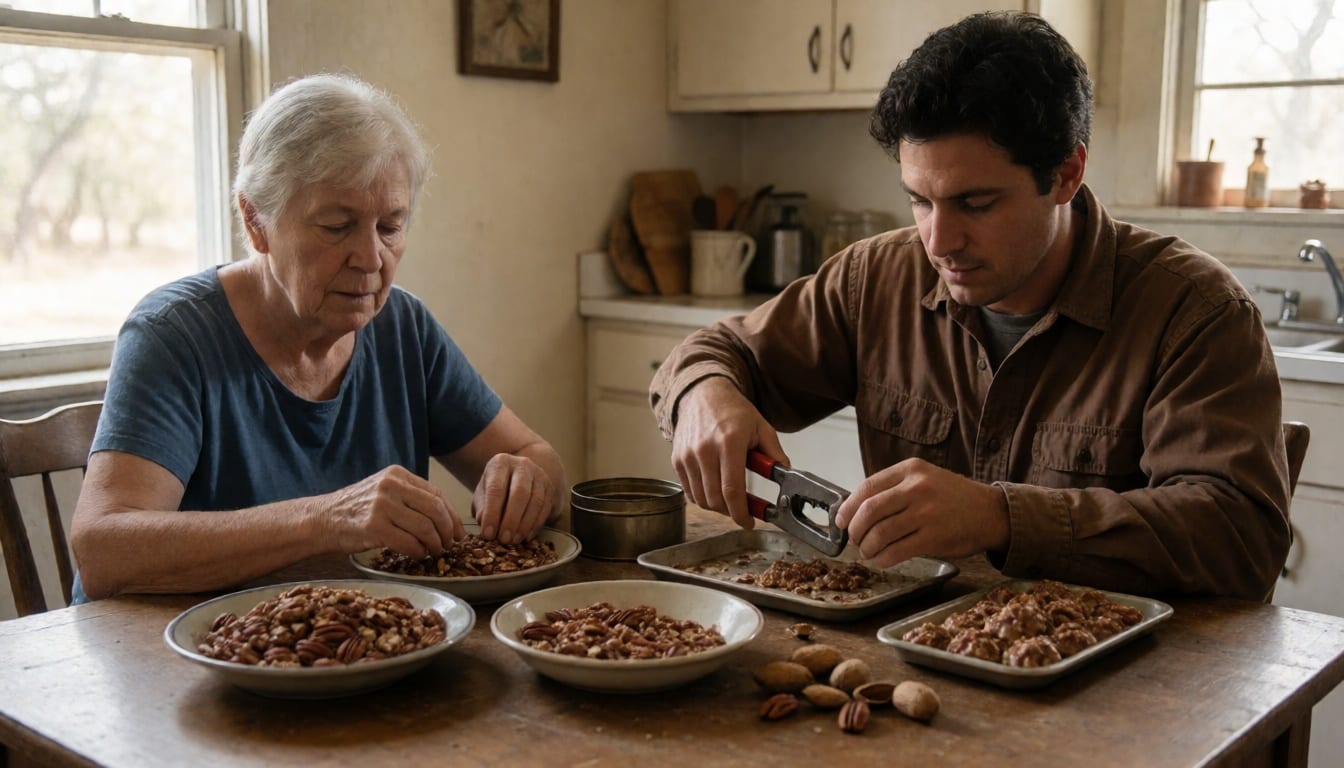
There is something about a bowl of pecans on a Texas kitchen table that says the holidays are getting close.
Some are still in their shells. Others have been cracked and sorted into halves and pieces. A few may already be headed for a batch of pralines, a pan of fudge or a Christmas gift tin.
The timing is no accident. Across Texas, pecan harvest season arrives just as families begin thinking about Thanksgiving dinners and Christmas baking.
That connection reaches from the orchard to the kitchen. And it helps explain why one of Texas's most familiar crops has such a steady place in our holiday traditions.
The Harvest Arrives Right on Time
Pecan trees have grown in Texas long before anyone made a holiday candy recipe.
The tree is native to much of the state, especially its river valleys. Texas recognized the pecan as its official state tree in 1919, a distinction that reflects its long history here.
But a pecan does not appear in a candy dish without work.
Texas A&M AgriLife Extension explains that native pecans tend to reach harvest later in the fall. Some begin dropping in October, but many fall in November and December.
That puts the crop right alongside the season when Texans are getting ready to cook, bake and share food with neighbors.
Commercial growers use equipment to shake trees, gather nuts, remove debris and prepare the harvest for market. Smaller growers and households may gather pecans by hand, depending on the property and the trees.
Either way, there is labor between a branch full of nuts and a bowl of clean pecan halves.
What Happens Before the Candy Is Made
Anyone who has cracked pecans knows that the shell is just the beginning.
The kernels have to be separated from the shell, checked for quality and kept in good condition. Broken pieces are useful for some recipes, while larger halves are often preferred when appearance matters.
It is practical work, but it can also be shared work.
Texas Farm Bureau has published personal accounts of growing up gathering and shelling pecans in the fall, then saving bags in the freezer for later use. Those accounts offer a glimpse of a familiar household routine, though they should not be mistaken for proof that every Texas family followed the same custom.
The work makes a useful connection between generations. Someone teaches a younger helper how to crack a nut without crushing the kernel. Someone else sorts the pieces. Eventually, the bowl is full enough for the next recipe.
That is not a grand holiday production. It is ordinary work that helps keep a tradition going.
More Than Pecan Pie
Pecan pie gets plenty of attention in Texas, and for good reason. It is even the state's official pie.
But pecans have long appeared in a much wider collection of sweets.
An archived Texas Department of Agriculture cookbook includes pecan pralines, divinity, cookies, breads and other recipes. The collection shows how cooks used the state's nut crop in more than one kind of dessert.
Pralines bring together sugar and pecans in a candy that can be made in batches and shared. Divinity offers a different texture, often finished with chopped nuts. Candied pecans and brittle give the same ingredient another place on a holiday tray.
Those dishes have different histories, and none belongs exclusively to Texas. What ties them together here is a crop that families and commercial producers can obtain close to the holiday season.
A fresh bag of pecans gives the cook several choices.
Where the Orchard Meets the Gift Box
The connection extends beyond home kitchens.
Texas pecan growers sell whole nuts, shelled halves and pieces. Some also offer candy, flavored pecans, pies and gift assortments.
The Texas Pecan Growers Association maintains a supplier directory for people interested in buying from growers and processors across the state.
That is useful for anyone who wants to keep a little more of their holiday spending in Texas.
A bag of fresh pecans makes a practical gift for a person who enjoys baking. A box of pecan candy offers an option for someone who prefers the finished product.
The purchase supports a business that must manage trees, weather, harvest work, processing and sales before the holiday customer ever places an order.
Not every gift needs to be complicated. Sometimes the best choice is something useful, grown nearby and ready to share.
Keep the Nuts Fresh for Christmas
Buying pecans early does not mean leaving them on the kitchen counter until Christmas Eve.
Pecans contain natural oils, and those oils can lose quality during warm storage.
The Texas Pecan Growers Association recommends cold storage, especially freezing, to maintain quality over longer periods. Well-sealed containers help protect kernels from moisture and unwanted odors.
For the home baker, the advice is straightforward: buy good pecans, keep them sealed and cold, and take out what the recipe needs.
Check for nuts that smell stale or rancid before using them. If you are gathering your own crop, make sure the kernels have been properly cleaned and dried before storage.
One more practical point matters. The Texas Government Code restricts causing pecans to fall from trees without the appropriate property ownership or written permission. A tree beside a road or in a public space is not automatically available for anyone to shake.
Buying from a grower or gathering with the owner's permission avoids that problem.
A Tradition Worth Passing Along
The Texas pecan crop is larger than any single candy recipe.
It involves farmers who tend trees throughout the year, people who gather and process the nuts, businesses that bring them to market and cooks who turn them into something to share.
That is what makes the holiday connection meaningful.
A jar of pralines or a bag of pecan halves may look simple. Behind it are seasons of growth, harvest work, practical skills and the people who keep them going.
When the pecans start appearing in kitchens and gift boxes, Christmas feels a little closer.
And in Texas, that is a tradition that fits right at home.
Quick Facts Texas harvest season: Generally fall, with many native pecans falling in November and December Official state tree: Pecan, designated in 1919 Holiday uses: Pralines, divinity, brittle, candied nuts, cookies and pies Buying local: Use the Texas Pecan Growers Association supplier directory to find growers and processors Storage: Keep properly dried pecans sealed and refrigerated or frozen for longer-term quality Gathering rule: Obtain appropriate property-owner or public-land authorization before causing pecans to fall from trees 2026 crop availability and prices: Vary by grower, variety and location; confirm directly before ordering
Sources and Further Reading Texas A&M AgriLife, Native Pecan Production: Native pecan harvest timing, gathering and processing. Handbook of Texas, Pecan Industry: Texas pecan history and commercial development. Texas Pecan Growers Association, Supplier Directory: Growers, processors and retail options. Texas Pecan Growers Association, FAQs: Storage guidance and practical pecan information. Texas Department of Agriculture, Texas Pecan Recipes: Historical state recipe collection. Texas Farm Bureau, Texas Pecans: Family gathering and storage context. Texas Government Code, Chapter 3101: State tree designation and rules concerning pecan gathering. |
0 Comments
Join the conversation
Be the first to comment
Share your thoughts above.