

Why Galveston Celebrates Dickens on The Strand: The People Who Saved a Victorian Downtown |
What began as a small holiday gathering became a Texas Christmas tradition and helped bring new life to one of Galveston's most important historic districts. |
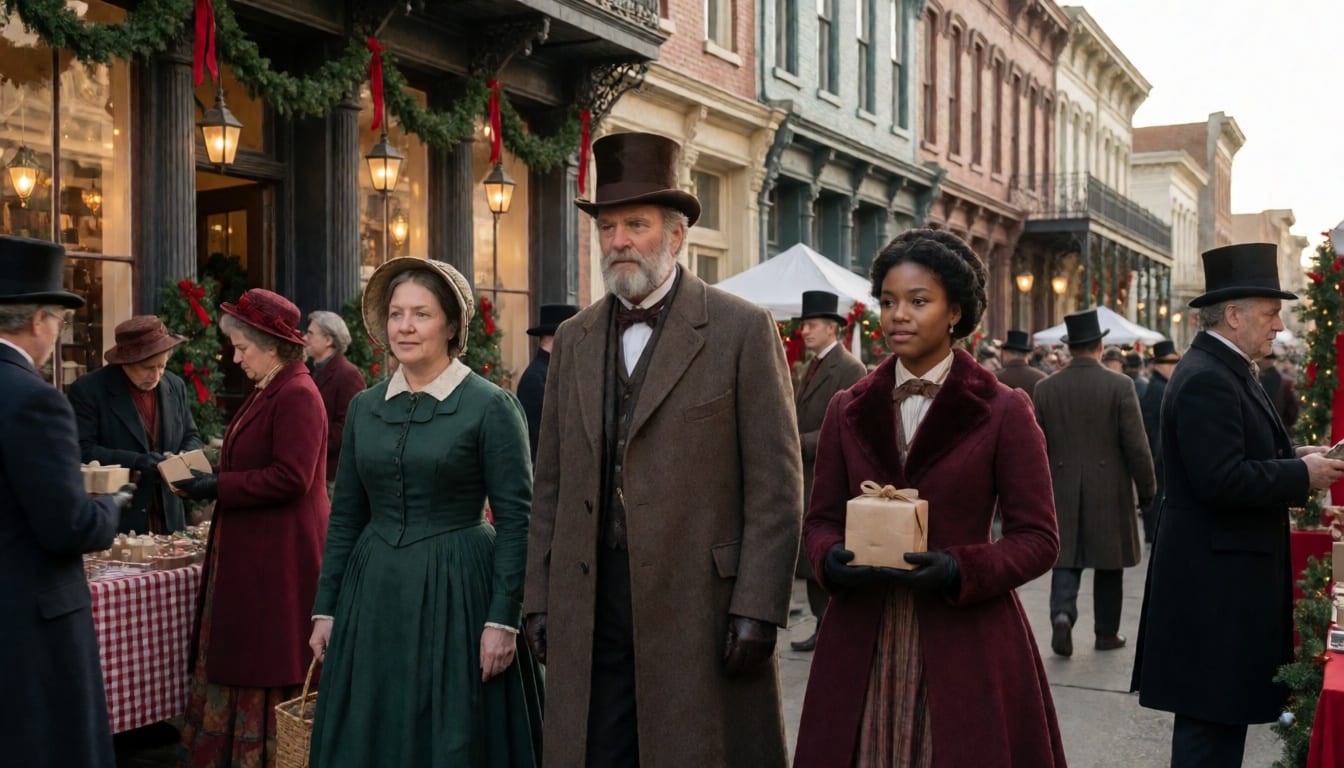
Every December, a few blocks of downtown Galveston seem to step back in time.
Top hats appear beside old storefronts. Women in Victorian dresses stroll past merchants selling holiday gifts. Music and laughter carry through streets that have witnessed more than a century of Texas history.
It is Dickens on The Strand, one of the state's best-known Christmas traditions.
But the festival did not begin simply because Galveston wanted another holiday attraction.
Its roots reach into a time when local preservationists were trying to save a historic downtown that many people had stopped seeing as worth saving.
That is the story behind the costumes, carols and Christmas cheer.
Why Charles Dickens belongs in a Texas seaport
Galveston and Victorian England might seem an unlikely pair.
Yet during the nineteenth century, Galveston was one of Texas's busiest commercial centers. Its prosperous port supported grand stores, banks and office buildings. Many were built during the same broad Victorian era associated with British writer Charles Dickens.
The Strand became known for its impressive commercial architecture, including richly detailed buildings that still stand today.
There was another connection: London also has a famous street called the Strand.
When Galveston's preservationists imagined bringing visitors back downtown, Victorian London offered a way to make people see the architecture with fresh eyes.
The spirit of Dickens's A Christmas Carol, with its themes of generosity, community and second chances, fit the season.
The festival grew from that connection, not from a documented visit by Dickens to Galveston. Local tourism history specifically notes that the author never visited the island.
A festival born from a preservation effort
By the early 1970s, portions of Galveston's once-busy historic business district had fallen into serious decline.
Buildings stood empty. Some had deteriorated, and others faced the threat of demolition.
The Galveston Historical Foundation and community preservationists were looking for ways to convince residents, property owners and investors that the buildings still had a future.
One answer was to invite people back into the district.
In 1974, the foundation held an Old English Christmas and Hanukkah gathering for members, with costumes and shared food. The event helped lead to a public celebration known as Dickens's Evening on The Strand.
One of the people closely associated with those early years was Evangeline Whorton, a preservation advocate who helped organize the celebration.
In a recorded oral history, Whorton recalled the idea of using the district's Victorian setting to help people recognize the beauty and potential of the old buildings.
It worked well enough to grow.
The festival expanded to a full weekend in 1983 and formally took the name Dickens on The Strand in 1984.
What began as a way to draw attention to endangered buildings became a tradition that outlasted the original preservation campaign.
Where George and Cynthia Mitchell fit into the story
The revival of The Strand also owes a great deal to George and Cynthia Mitchell.
George Mitchell was a Galveston native who built a major energy business and became closely associated with the development of The Woodlands near Houston.
He and Cynthia shared an interest in protecting Galveston's historic architecture.
The Mitchells supported the larger restoration effort by investing in historic properties and helping turn neglected buildings into places where people could shop, dine, work and visit.
George Mitchell also supported efforts to learn from preservation projects in other cities. Alongside foundation leaders and other investors, the couple helped show that preserving old buildings could be part of a workable future for downtown.
Peter Brink, who led the Galveston Historical Foundation during important early years, was another central figure in the district's revival.
The Mitchells' investment helped bring new attention and resources to The Strand, but they were not the sole founders of the preservation movement or of Dickens on The Strand.
That distinction matters because this story belongs to a community.
Preservation advocates, property owners, volunteers, donors and business operators all helped bring life back to the district. The Mitchells played a significant role in making that work last.
Today, the restored buildings remain part of the festival's appeal.
They are also something visitors can appreciate on an ordinary day in Galveston, long after the Christmas decorations have come down.
From empty buildings to a busy Christmas street
The early Dickens celebrations were quite different from the festival visitors know today.
Preservation materials describe vendors setting up inside vacant buildings, with lanterns helping create a nineteenth-century atmosphere.
Those spaces were not simply decorations. They showed people what the district might become if the buildings were restored and used again.
As the restoration effort succeeded, the festival changed too.
Street stalls replaced many of the indoor market spaces. More performers, vendors and family activities joined the celebration.
The same buildings that once needed attention became the backdrop for crowds enjoying the holidays.
That is an unusual kind of success story. A Christmas event helped give the public a reason to care about historic places, and those places helped give the Christmas event its identity.
What visitors can experience in 2026
The 53rd annual Dickens on The Strand is scheduled for December 4–6, 2026, in Galveston's Strand Historic District.
The Galveston Historical Foundation is planning Victorian-themed entertainment, parades, costumed characters, holiday shopping and activities for children.
Festival hours are:
Friday, December 4: 5–9 p.m., free admission Saturday, December 5: 10 a.m.–9 p.m., paid admission Sunday, December 6: Noon–6 p.m., paid admission
The organizer currently lists general admission at $20 for adults and $13 for children ages 7–12, with free admission for children 6 and under. Prices rise by $5 on November 20.
Visitors wearing Victorian costumes can receive half off admission at the gate, subject to the published festival rules.
Paid parking is available around the district. Special tours and additional experiences may require separate tickets.
If you're visiting from another part of Texas, check the official festival map before leaving home. The event occupies an active downtown area, and street access can change during festival hours.
For families with younger children, allow time to walk slowly, take breaks and enjoy the historic buildings as well as the scheduled entertainment.
The larger lesson behind the Christmas lights
There is a reason Dickens on The Strand has lasted so long.
The festival is entertaining, but it also gives people a reason to value a place that nearly lost part of its history.
Galveston's historic buildings survived because people believed they were worth preserving. Some gave time. Others supplied money, restored properties, organized events or opened businesses.
The reward is a downtown that still tells its story.
The next time you see Victorian costumes moving through The Strand, look beyond the holiday decorations.
The buildings themselves may be the most important part of the celebration.
And that is something worth keeping long after Christmas.
Quick Facts
Festival: 53rd Annual Dickens on The Strand Dates: December 4–6, 2026 Location: The Strand National Historic Landmark District, Galveston, Texas Friday: 5–9 p.m., free general admission Saturday: 10 a.m.–9 p.m., paid admission Sunday: Noon–6 p.m., paid admission General admission: $20 adults, $13 ages 7–12, children 6 and under free, before the November 20 price increase Costume discount: Half off Victorian-costume admission at the gate Parking and accessibility: Official festival map and visitor information Tickets and optional experiences: Official festival ticket information Historic preservation organization: Galveston Historical Foundation
Sources and Further Reading
Galveston Historical Foundation: Dickens on The Strand history and event details Galveston Historical Foundation: Organizational history and preservation milestones Galveston Historical Foundation: Festival origins and preservation background Texas Legacy: Evangeline Whorton oral history Society of Architectural Historians: The Mitchells and The Strand rehabilitation Mitchell Historic Properties: George and Cynthia Mitchell preservation work |
0 Comments
Join the conversation
Be the first to comment
Share your thoughts above.